
Introduction
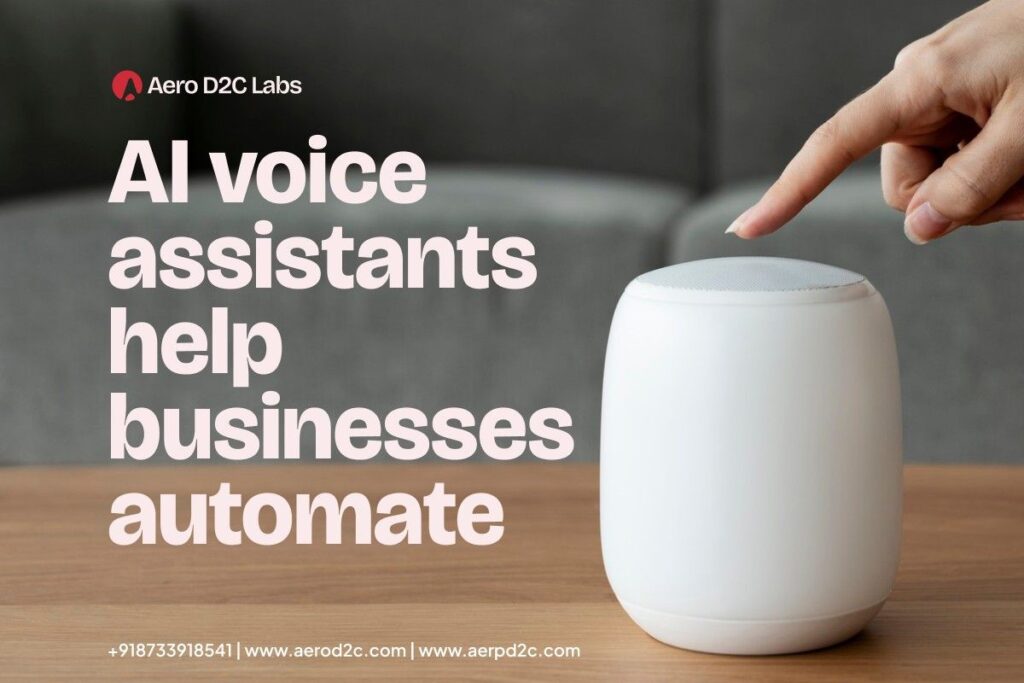
Artificial intelligence has rapidly transformed the way businesses operate, communicate, and deliver services to their customers. One of the most significant innovations within this transformation is the development of AI voice assistants. These intelligent systems allow users to interact with technology through spoken commands, enabling faster and more natural communication between humans and digital platforms.
In today’s digital environment, businesses are constantly looking for ways to improve efficiency, reduce operational costs, and enhance customer experiences. Traditional methods of communication, such as email support or manual data entry, often require time and human resources. AI voice assistants help businesses overcome these challenges by automating tasks and providing instant responses to user queries.
Voice technology has already become a part of everyday life. Consumers regularly use voice-enabled devices powered by systems such as Amazon Alexa, Google Assistant, and Apple Siri to search for information, manage schedules, or control smart devices. As these technologies become more common in daily life, businesses are recognizing their potential for improving digital services and operational workflows.
AI voice assistants enable organizations to automate interactions with customers, manage appointments, retrieve data, and perform a wide range of operational tasks. Instead of relying solely on manual processes, companies can use voice-enabled systems to streamline operations and provide faster services.
Many organizations are now integrating voice-based automation into their websites, applications, and internal systems. This allows employees and customers to interact with digital platforms in a more intuitive and efficient way. Businesses implementing advanced AI automation strategies often work with technology providers such as AeroD2C Labs to develop customized solutions that align with their operational needs.
In this article, we will explore how AI voice assistants work, their role in modern business automation, their real-world applications, and the future trends that will shape the next generation of voice-enabled business technologies.
What Are AI Voice Assistants?
AI voice assistants are software systems powered by artificial intelligence that allow users to interact with technology using spoken commands. Instead of typing instructions or navigating complex interfaces, users can simply speak to the system and receive responses instantly.
These assistants rely on a combination of technologies including speech recognition, natural language processing, and machine learning to understand human language and perform tasks. When a user speaks to a voice assistant, the system captures the audio input, converts it into text, analyzes the meaning of the request, and then executes the appropriate action.
Voice assistants are designed to create a conversational experience between humans and machines. This allows users to communicate naturally with digital systems, making technology easier and more convenient to use.
Popular Examples of AI Voice Assistants
Several well-known platforms have popularized voice technology worldwide.
Some of the most widely used voice assistants include:
These platforms allow users to control smart devices, search the internet, send messages, and perform various tasks using voice commands.
AI Voice Assistants in Business
In business environments, voice assistants are increasingly being integrated into digital platforms such as websites, mobile apps, and internal systems. Organizations use these assistants to automate customer support, manage workflows, and improve operational efficiency.
For example, a customer might ask a voice assistant about product availability, delivery status, or service details. Instead of waiting for human support, the assistant can provide instant responses based on the company’s database.
Similarly, employees can use voice assistants to retrieve business reports, schedule meetings, or access company information quickly. This improves productivity and reduces the time spent on repetitive tasks.
As AI technologies continue to evolve, voice assistants are becoming smarter and more capable of handling complex conversations, making them valuable tools for modern business automation.
How AI Voice Assistants Work
AI voice assistants function through several advanced technologies that work together to understand human speech and perform tasks efficiently.
Speech Recognition
Speech recognition is the first step in the voice assistant process. When a user speaks a command, the assistant captures the audio and converts it into text using speech recognition algorithms. This allows the system to analyze the spoken words.
Natural Language Processing
Once the speech is converted into text, natural language processing (NLP) helps the assistant understand the meaning behind the command. NLP analyzes sentence structure, keywords, and context to determine what the user wants.
Machine Learning
Machine learning allows voice assistants to improve their performance over time. By analyzing previous interactions, the system learns how users communicate and becomes better at understanding different accents, speech patterns, and phrasing.
System Integration
After understanding the command, the voice assistant connects with other software systems to perform the requested task. This may include retrieving data from a database, scheduling an appointment, or providing a spoken response.
For businesses, these integrations allow voice assistants to connect with tools such as customer relationship management systems, booking platforms, and analytics dashboards. This makes it possible to automate a wide range of business processes.
The Role of AI Voice Assistants in Business Automation
AI voice assistants play an important role in helping businesses automate operations and improve efficiency. By enabling voice-based interactions with digital systems, these assistants simplify processes and reduce manual work.
Customer Support Automation
Businesses often receive numerous customer inquiries related to products, services, and orders. Voice assistants can automatically answer common questions, reducing the need for human customer support agents.
Appointment Scheduling
Many industries rely on appointment systems. Voice assistants can manage bookings, confirm appointments, and send reminders to customers automatically.
Workflow Automation
Employees can use voice commands to perform routine tasks such as retrieving reports, accessing documents, or updating records. This saves time and simplifies workflows.
Data Access and Reporting
Voice assistants can provide instant access to business data. Managers can ask questions about sales performance, customer activity, or inventory levels and receive quick responses.
By automating these processes, businesses can operate more efficiently while improving both customer and employee experiences.
Benefits of AI Voice Assistants for Businesses
AI voice assistants provide several advantages that help businesses improve productivity and deliver better services.
Improved Customer Experience
Voice assistants allow customers to receive instant answers to their questions. This improves satisfaction and reduces waiting times.
Increased Efficiency
By automating routine tasks, voice assistants help businesses save time and reduce manual workloads.
Cost Reduction
Companies can lower operational costs by automating basic support tasks instead of relying entirely on human staff.
24/7 Availability
Voice assistants operate continuously, allowing businesses to provide support at any time of the day.
Faster Access to Information
Employees and customers can quickly retrieve information through voice commands, improving productivity and decision-making.
Real Business Use Cases
AI voice assistants are being adopted across many industries to improve operational efficiency and customer service. Below are some practical examples of how businesses are using voice assistant technology.
E-commerce
In the e-commerce industry, AI voice assistants help customers search for products quickly and easily. Instead of browsing through multiple pages, users can simply ask a voice assistant to find specific items. The assistant can also provide product recommendations based on user preferences.
Voice assistants also help customers track their orders, check delivery status, and receive updates about shipping. This improves the overall shopping experience and reduces the workload for customer support teams.
Healthcare
Healthcare organizations are increasingly using AI voice assistants to simplify administrative tasks. Patients can use voice assistants to schedule appointments, receive reminders, and access basic health information.
Medical staff can also benefit from voice assistants by using them to retrieve patient records, update documentation, and manage schedules. This reduces paperwork and allows healthcare professionals to focus more on patient care.
Banking
Banks and financial institutions are using voice assistants to improve customer support and accessibility. Customers can ask voice assistants about their account balances, recent transactions, or available financial services.
Voice assistants can also guide users through processes such as bill payments or fund transfers. By automating these tasks, banks can provide faster and more convenient services to their customers.
Smart Offices
In modern workplaces, voice assistants are helping organizations create smarter and more efficient office environments. Employees can use voice commands to schedule meetings, set reminders, or check daily schedules.
Voice assistants can also integrate with office systems to control devices such as lights, projectors, and meeting room equipment. These capabilities improve workplace productivity and create more organized work environments.
AI Voice Assistants vs AI Chatbots
AI voice assistants and AI chatbots both help businesses automate communication with customers, but they operate differently.
Voice assistants rely on spoken commands, allowing users to interact with systems through voice conversations. This makes them ideal for hands-free environments such as smart devices or mobile applications.
Chatbots, on the other hand, rely primarily on text-based interactions. Users communicate with chatbots by typing messages in chat interfaces on websites or messaging platforms.
Both technologies have their advantages. Voice assistants provide a more natural and conversational experience, while chatbots are easier to implement on websites and digital platforms.
Many businesses use both solutions together to provide multiple communication channels for their customers.
Challenges of AI Voice Assistants
Despite their advantages, AI voice assistants also present certain challenges.
Voice recognition accuracy can sometimes be affected by accents, background noise, or unclear speech. This may lead to misunderstandings in certain situations.
Privacy and security are also important considerations. Because voice assistants process personal and business data, organizations must ensure strong data protection measures are in place.
Integration with existing business systems can also require technical expertise. Businesses must carefully plan how voice assistants connect with databases, CRM systems, and other software tools.
Finally, voice assistants may struggle with complex conversations or unusual requests. Continuous training and updates are required to improve performance..
Future of AI Voice Assistants in Business
The future of AI voice assistants in business is expected to bring even more advanced automation and improved user experiences.
Voice Commerce
Voice commerce is becoming an important trend in digital retail. Customers are beginning to search for products and make purchases using voice commands, creating new opportunities for businesses to sell products through voice-enabled platforms.
Conversational AI
Future voice assistants will become more conversational and capable of understanding context. This will allow them to interact with users in more natural and human-like ways.
Smart Workplace Automation
Voice assistants will increasingly be used to control workplace systems and manage daily operations. Employees will be able to control devices, access information, and manage tasks using simple voice commands.
AI-Powered Customer Engagement
Businesses will use voice assistants to deliver personalized interactions with customers. By analyzing user behavior and preferences, these assistants can provide more relevant recommendations and support.
These advancements will significantly reshape digital business operations in the coming years.
According to research from the Stanford Human-Centered Artificial Intelligence Institute, AI adoption across industries continues to grow rapidly.
Conclusion
AI voice assistants are becoming an essential part of modern business automation. By enabling voice-based communication with digital systems, these technologies simplify interactions, automate repetitive tasks, and improve operational efficiency.
Businesses that adopt voice assistant technology can provide faster customer support, streamline internal processes, and enhance overall productivity. From customer service to workplace management, voice assistants are helping organizations operate more efficiently and deliver better experiences to their users.
As artificial intelligence continues to evolve, voice assistants will become even more capable of understanding complex conversations and performing advanced tasks. This will allow businesses to automate a wider range of operations and create smarter digital environments.
Organizations that embrace voice-enabled automation today will be better prepared for the future of digital business. By integrating AI voice assistants into their systems, companies can improve efficiency, reduce costs, and stay competitive in an increasingly technology-driven marketplace.
FAQs
1. What is an AI voice assistant in business?
An AI voice assistant is a software system that uses artificial intelligence and speech recognition to automate tasks, answer questions, and assist users through voice commands.
2. How do AI voice assistants help businesses?
AI voice assistants help businesses automate customer support, schedule appointments, provide information, and improve operational efficiency.
3. Are AI voice assistants better than chatbots?
AI voice assistants and chatbots serve different purposes. Voice assistants use spoken commands, while chatbots interact through text. Many businesses use both technologies together.
4. Which industries use AI voice assistants?
Industries such as healthcare, e-commerce, banking, hospitality, and customer support commonly use AI voice assistants.
5. What is the future of AI voice assistants?
The future of AI voice assistants includes voice commerce, conversational AI, and deeper integration with business automation systems.